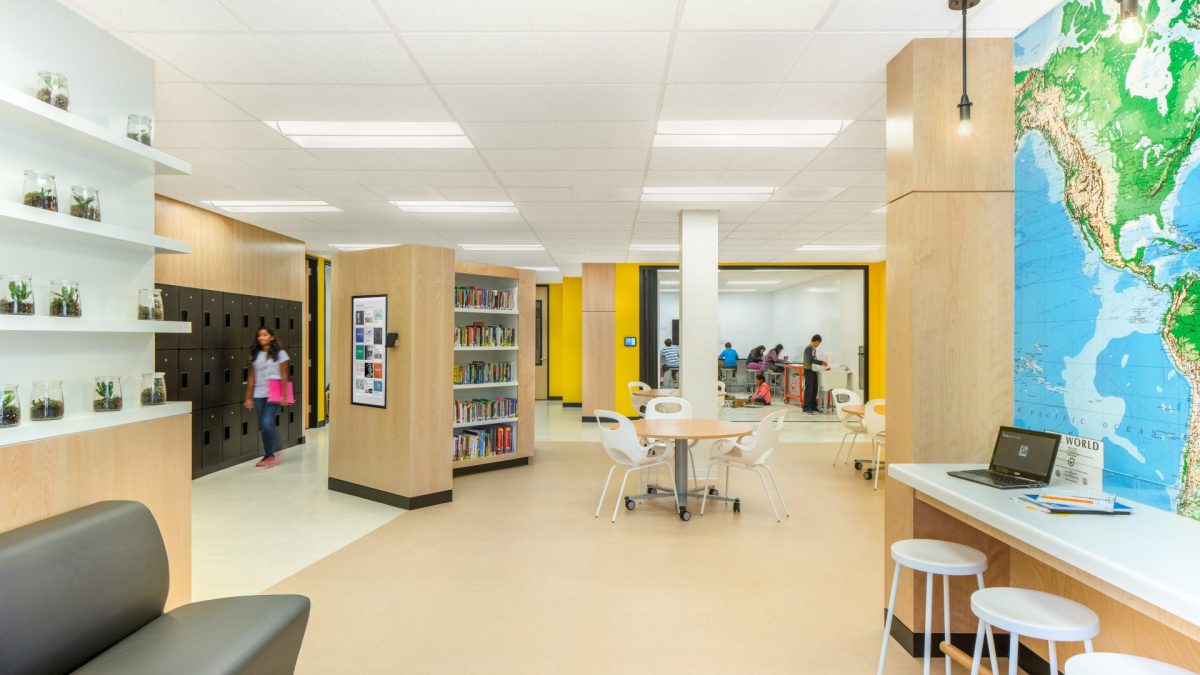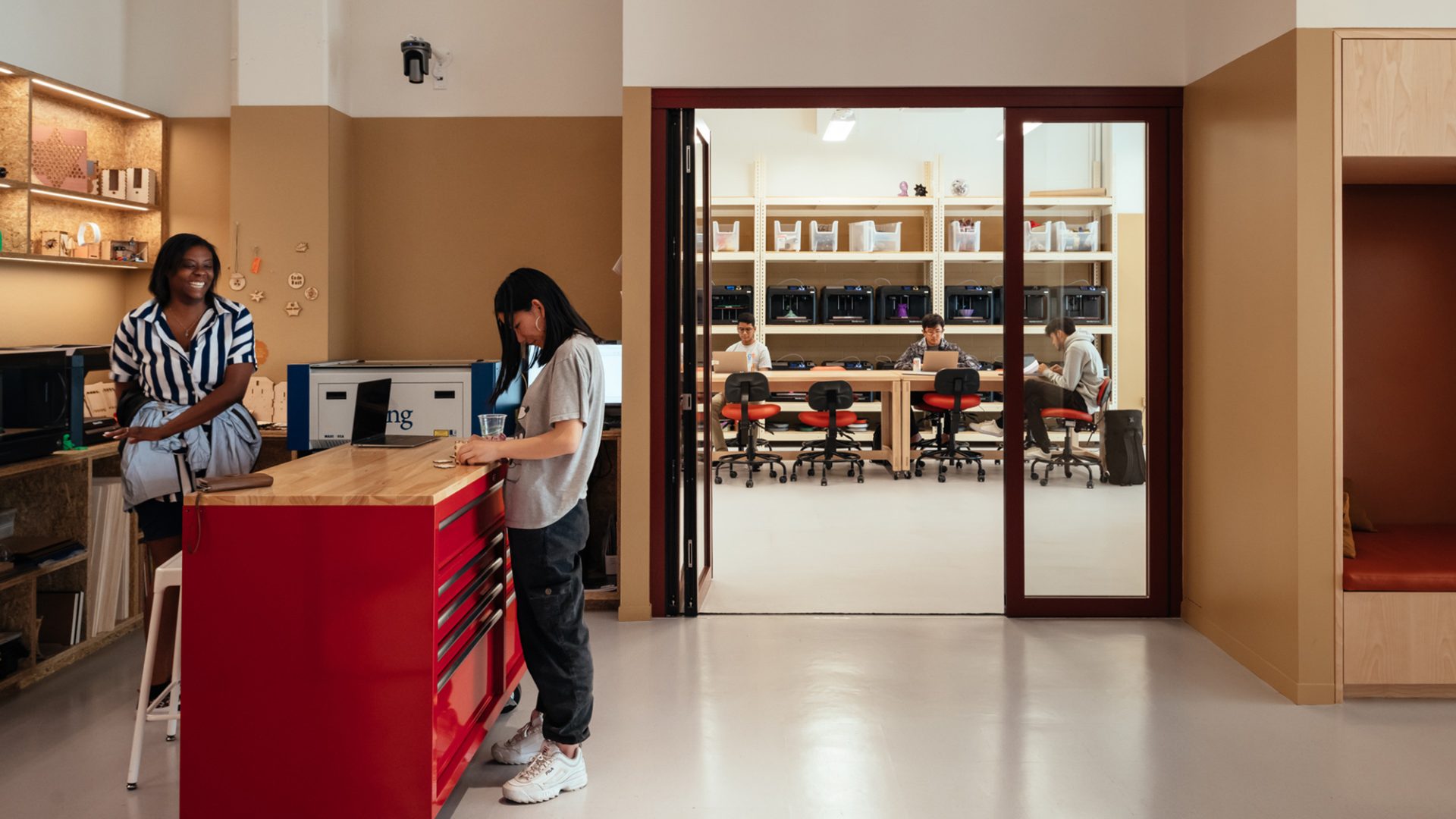
- Google partnered with Kurani to build computer science labs in underserved neighborhoods, instead of having students travel to Google offices.
- Rather than leading with aesthetics, Kurani ran workshops with the Code Next founders, students, and educators to understand how the space’s design could build confidence, foster belonging, and encourage risk-taking and a maker mindset.
- The result was a space that felt permissionless: where all the supplies and fancy equipment were in reach, furniture was modular, and kids felt a sense of ownership of the labs—and their futures.
When the first Code Next Lab opened in Fruitvale Village, Oakland in 2016, we were nervous. Kurani had been diligently working on the project for a year, collaborating with Google and a mix of educators and computer scientists to design a lab where kids from all walks of life and socioeconomic backgrounds could not only learn about new tech innovations, but also see themselves becoming a part of the Tech world.
Nothing like that had existed in Fruitvale. But to our delight, the Code Next lab was immediately embraced by Oakland. Not only was the opening attended by Oakland’s Mayor and a huge crowd of community members, Kurani went on to work with Google for the next 10 years to create four more labs just like it: one in NYC, Detroit, LA, and another back in Oakland. The lab’s human impact only deepened over time: “This is more than a computer lab,” one Code Next instructor later told us. “This is a safe community space that our kids can come to and just be.”
This story is the truest measure of how Kurani works: We’re an architecture firm that designs lasting, sustainable spaces that put people and communities first. We don’t only talk to you about “aesthetics” and “square footage.” We use psychology and research to help clients understand how a space can instill confidence, foster belonging, and encourage risk-taking. We meet people wherever they are—and design to fuel their potential. The journey to creating the Code Next labs embodies that very mission.
How did we start?
When we first got the brief from Google, the team at Kurani knew we needed to start the process not by asking the Code Next founding members how many classrooms they needed (though we did that, too), but by listening to educators and students about what the ideal student experience should be and outlining how to address the particular challenges they face every day.
Tech has a diversity problem–and not just at the hiring stage. Nearly half of Black and Latin students in the U.S. do not have access to computer science (CS) classes, despite the existence of more than 1 million unfilled, high-paying CS jobs. Google sought to reach Black, Latin, and Indigenous students in cities where access to computer science education was limited and provide them with the skills needed for long, rewarding careers in CS-related fields. Importantly, Google was keen on creating place-based education. Instead of asking kids to travel to Google offices, they wanted these spaces in their neighborhoods—with input from community members who would actually use them.
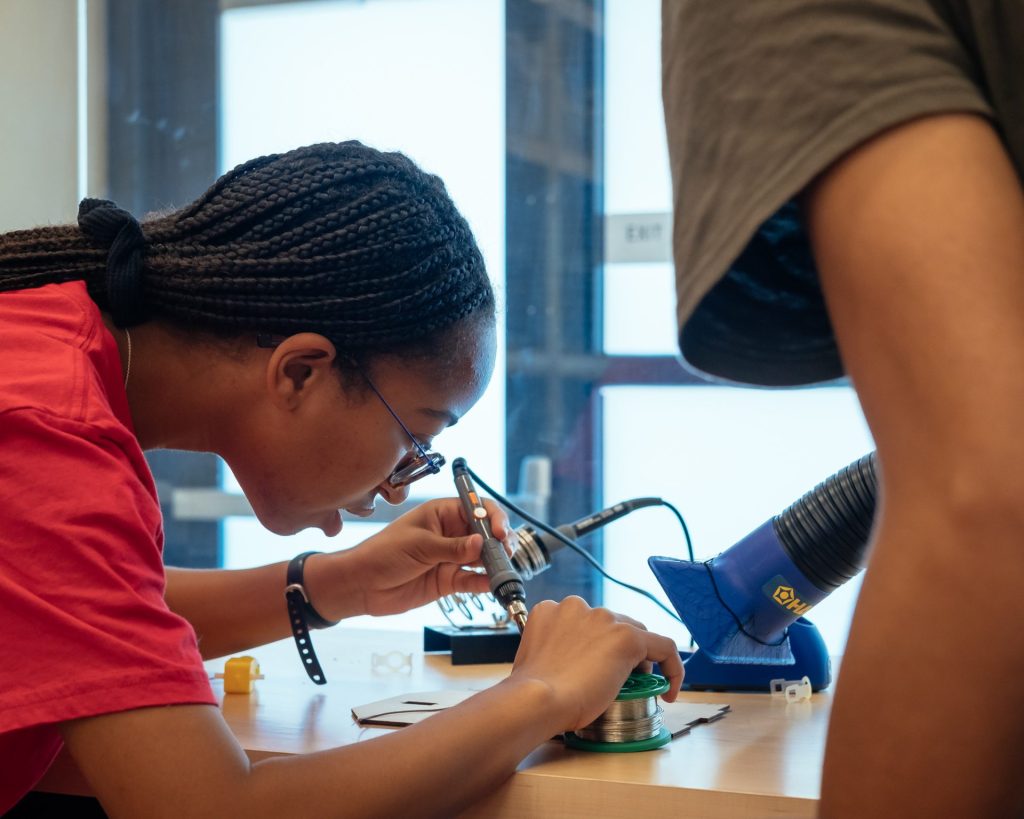
We started by leading a series of interactive workshops to help the founders of Code Next consider small but powerful ways to transform a student’s experience in a learning environment. In one session, for instance, we gathered a group of high school students and instructors in different learning spaces for test classes, so they could provide feedback on how well those spaces supported their needs. Running these workshops gave us a chance to observe their curriculum in action, and nail down the type of environment—from the layout and furniture to lighting, graphics, and technology—that would support that experience.
In another workshop, the Code Next founding team stood inside the actual space that would become the lab and acted out a typical afternoon. Some played students, others played instructors. We paused at key moments, such as the students’ arrival, and our design team prompted them with questions like “How do you want students to feel?” and “What do they do in their first few minutes after arrival?” These conversations helped the founding team think deeply about the lab’s experience and clarified their goals.
In fact, five goals emerged from the workshops:
- Create place-based learning that’s accessible
- Affirm that students of color belong in Tech
- Increase the appeal of computer science as a career
- Build student confidence and risk-taking
- Teach a maker mindset
Once solidified, these goals were shared with everyone on the Kurani design team, from our architects to the interior, furniture, graphics, and lighting designers, and we began to plan the space.
How do we make decisions?
At every step of the process, Kurani hosted design sessions where the Code Next founding team and staff could provide feedback and share concerns, desires, and experiences to inform our choices.
From our conversations, we learned that the team wanted to pick a space that was easy to get to for the community. That’s why, after over a dozen real estate tours and assessments with Kurani’s support, the Code Next team chose a retail storefront in Fruitvale Village for the first-ever Code Next lab. It sat at the very heart of the community: steps from the Fruitvale BART station, surrounded by shops, restaurants, a public library, and an outdoor market. For students who needed to get there on their own, it was perfect. But it did come with trade-offs: an awkward shape, street noise, and almost no natural light beyond the storefront windows.

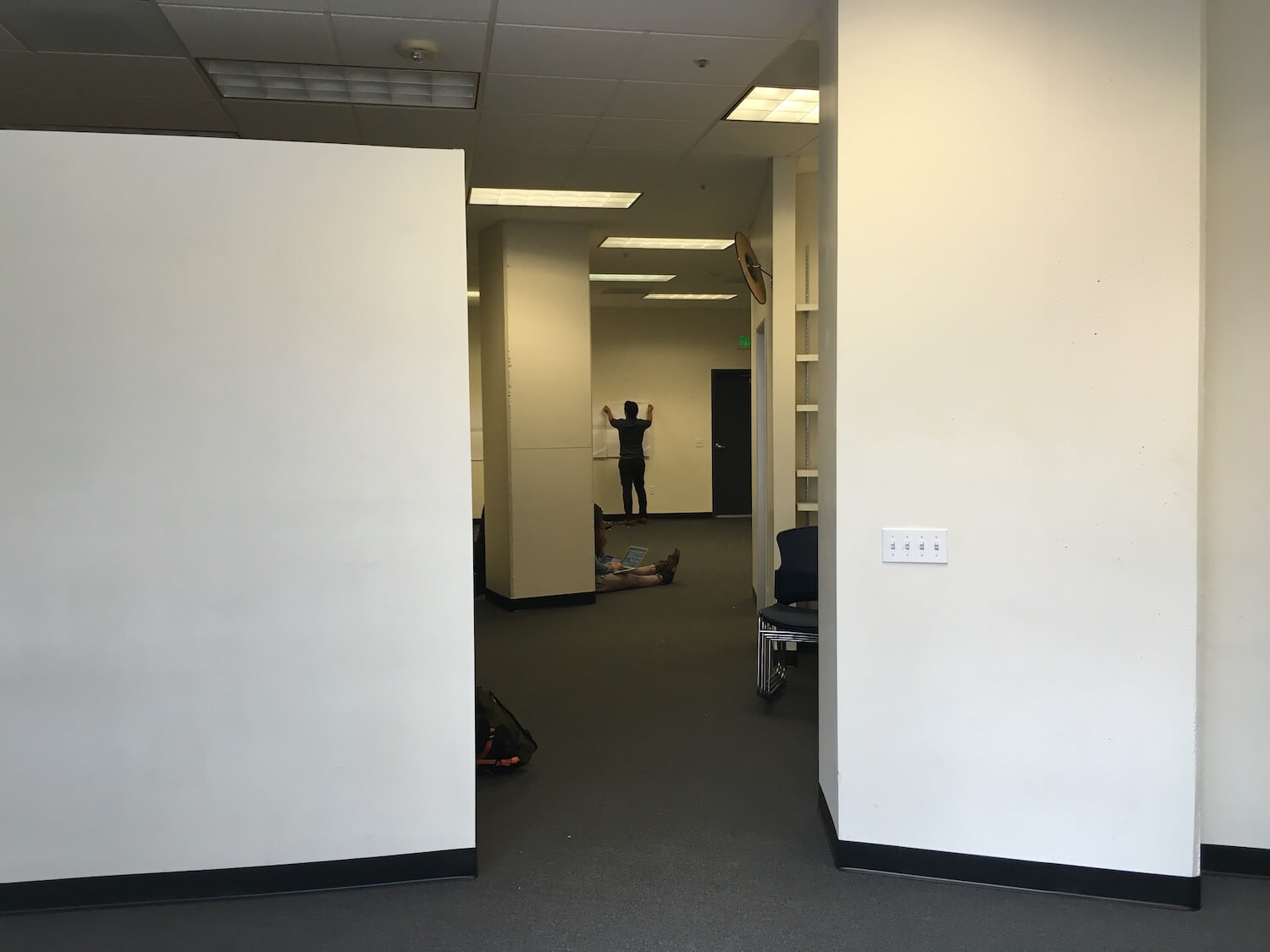
So we got creative with the space layout: rooms like the kitchen and the commons were toward the front, closest to the outside noise, while the classrooms and labs where kids needed to focus were tucked further back so they wouldn’t be distracted. We also gave the classrooms glass walls facing the commons to benefit from that brightness and decided to include lighting that felt warm rather than sterile.
The Code Next team explained that in order to help the students feel like they belong in Tech, we needed to make them feel like they belonged here first—like the lab was theirs. So we tested how different spaces like design studios, training rooms, lounges, and kitchen could be arranged to achieve that. We considered the sequence of student arrivals, where to locate staff so they are accessible to students, how to design spaces for introverts and extroverts alike, and even that supplies should be stored openly so kids don’t feel like they need to ask for permission. We laid out how these relationships manifested throughout the space in a diagram for our Code Next partners.

We also considered how the different spaces within the lab would need to feel distinct and used psychological concepts in the design to nudge students toward certain mindsets, behaviors, and feelings that would help them build confidence. The fabrication area, for instance, would have higher ceilings to promote creativity and a rougher, more durable feel, so students wouldn’t worry about breaking things or making a mess. The software training room, on the other hand, would need to have lower ceilings and be pared down with a large monitor and ample dry-erase space so students would have an easier time focusing on the instruction. This meticulousness really stuck with Code Next’s founding members: “The attention to detail was top-notch,” one co-founder said in their testimonial. “I love how psychology was incorporated into the design.”

Human psychology is at the heart of how we approach a space—even in the smallest of ways. For instance, when the Code Next team mentioned wanting to combat imposter syndrome and help students learn that inspiration can come from their own community, Kurani developed a digital billboard that would spotlight one student each week, accompanied by a quote about their future aspirations. We realized it’s not very relatable to point to tech titans like Mark Zuckerberg, Bill Gates, and Elon Musk. It’s far more relatable if students see what their peers are dreaming of and are inspired by it. And for the student who’s on the billboard that week, it makes them feel special and instills a sense of belonging.

Sustainability was handled with the same level of thought and care. Rather than being just a compliance checkbox, sustainable materials became a teaching tool. We suggested using carpets made from recycled fishing nets, plant-based flooring that looked like concrete, and added graphic etchings to the finishes and furniture to teach students about eco-conscious production. The building itself would become a silent instructor.
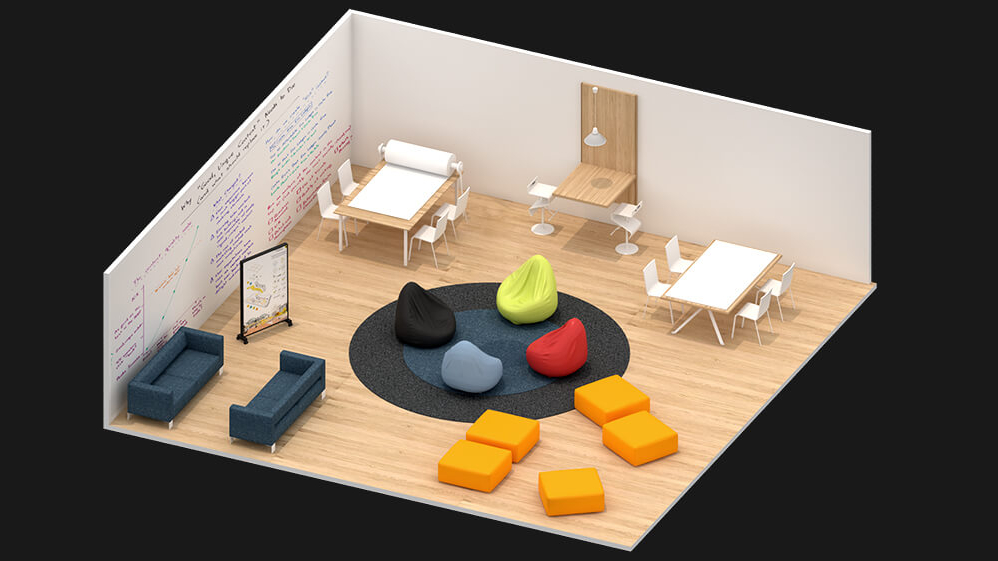
We then synthesized these ideas into a digital 3D model, which allowed us to test whether these components work well together. We created a VR version of the space for our client to walk through virtually and even test different options for custom furniture.

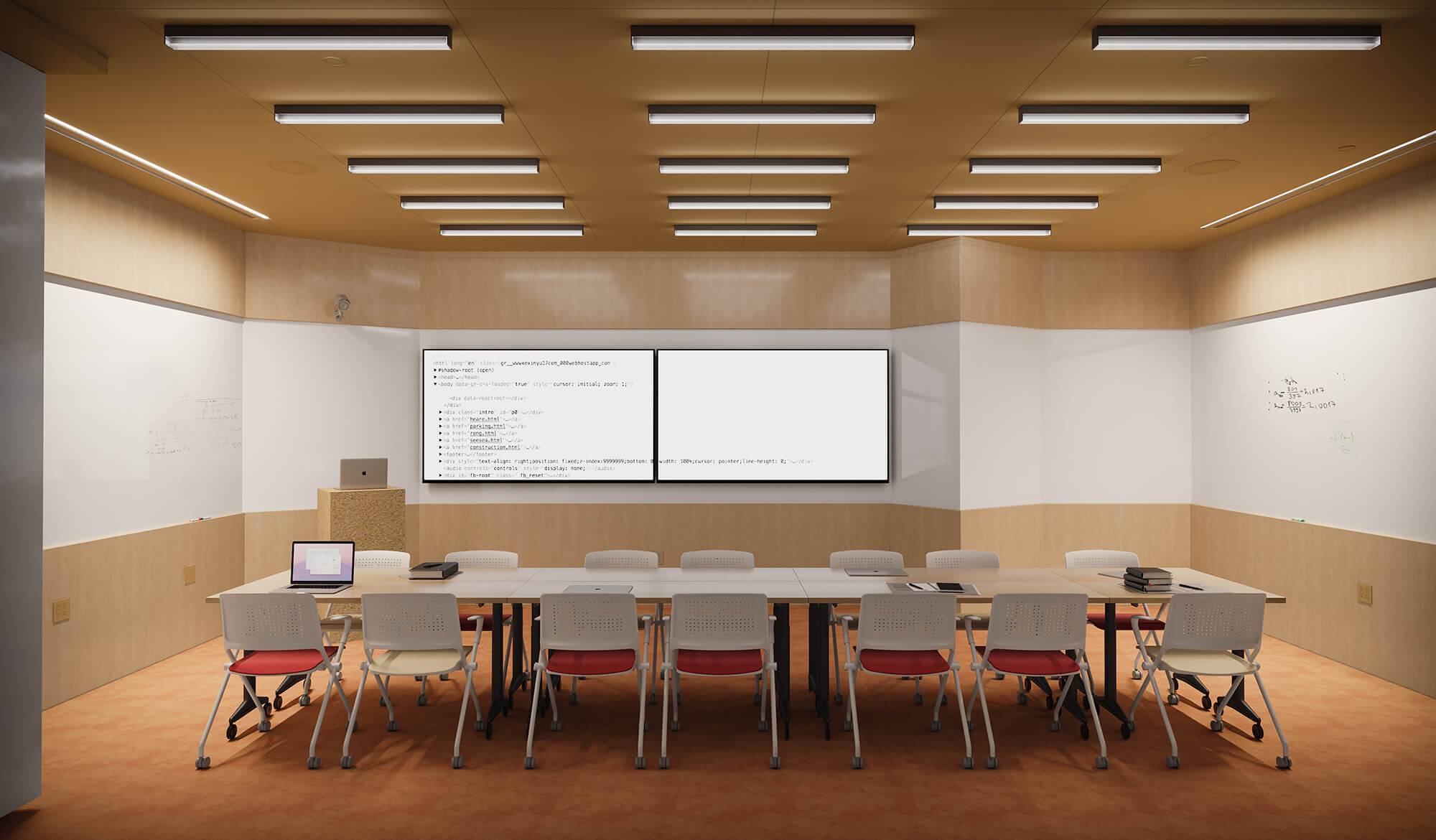
It became so easy to see how quickly the space could be rearranged from a typical day setup to a big presentation or hackathon, and how the goals tangibly manifested throughout the design.
How do we handle problems?
At Kurani, we adopt a growth mindset always. Some of our best solutions come from iterating through problems with our clients. Code Next was no different.
Not only did we learn and adapt when obstacles arose (like the awkward shape of the original Oakland space), but we also anticipated questions that the client didn’t even know they had. For instance, because Code Next has many guest instructors, they’re not always familiar with the space and its features. So we created a visual guide with very clear instructions on how to use the space. Where we had operable walls, for example, we added a graphic for how to expand the wall. And with flexible furniture, we provided diagrams that show how the room could be arranged for different tasks.
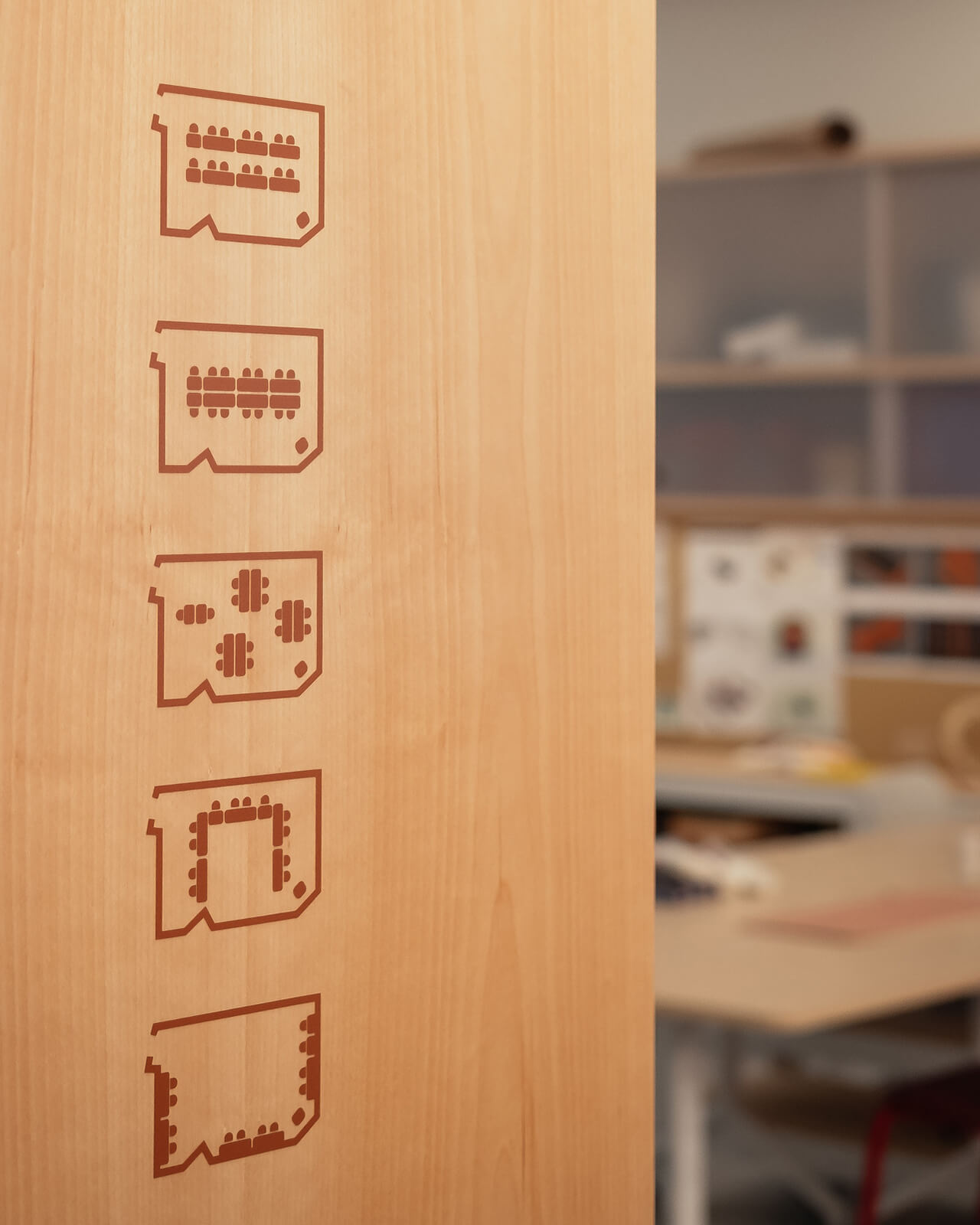
In fact, we created a full User’s Manual for staff, covering everything from room arrangements to AV systems, with how-to videos for the more complex equipment.
Our involvement didn’t stop at the design either. We shepherded the project throughout construction, reviewing contractor bids, monitoring progress, and flagging issues early. For instance, during construction of the Fruitvale Village lab in Oakland, the contractor failed to install proper bracing within the wall to support the shelving and equipment. We caught the problem early and developed a solution together, preventing a safety issue for the occupants and legal issues for Google.
Additionally, we worked directly with fabricators to build custom furnishings, reviewed audiovisual systems to ensure they were functioning properly, conducted research to understand how students and staff experienced the space, and presented our client with photography, videography, and PR strategies to help them communicate their impact and garner public support.
How do we know it worked?
After the opening of the second Oakland lab, we heard that a security guard on-site was so inspired by what he saw students learning at Code Next that he encouraged his daughter to join the program. She went on to become one of Code Next’s most active students.
This is just one example of how much of Code Next’s impact was felt by everyone. As one instructor put it, “When all the kids walked in for the first time, their eyes lit up. They knew this space belonged to them.” The educator went on to say that, from the graphics on the walls to the openness of the space, the lab made students want to learn more about how they can actually be a part of the Tech world, something that they probably don’t see at school. Students wholeheartedly agreed. “When I tell my friends about this lab, I tell them it’s way better than regular classrooms,” said one lab goer.
Our client felt a huge, tangible return on their investment, too: “When you come in here on a Saturday, and you see twenty-five Black and brown kids huddled around computers and making things, and their parents hanging out here… We have created something very special and very unique. I think that it will become a real hub of innovation. And it’s become a community asset.”

A year after the opening of the first Code Next lab, empirical data confirmed what people were saying out loud. According to our research, 87% of students felt more creative in a Kurani-designed Code Next space than in their regular school. Two out of three students felt more confident in a Kurani-designed space than at school. Now five labs strong across the U.S., 88% of Code Next graduates chose to major in STEM, compared to a national average of 18% for Black students and 20% for Latin students.
Through the Code Next partnership, we learned how to help students feel comfortable in a learning space and give them a sense of ownership. That meant giving them access to the tools, trusting them, and actually listening to not only the students’ needs, but the community that is helping to shape them.